Correctional Facility

At Lanier Meyer McBride Blair LLP, we understand the devastating impact of sexual abuse within correctional facilities. Inmates are among the most vulnerable populations, often unable to protect themselves or report abuse due to their incarcerated status. As dedicated advocates for survivors, we're committed to fighting for justice, holding perpetrators and negligent institutions accountable, and pushing for systemic changes to protect inmates. This guide provides essential information for survivors, families, and advocates ready to take a stand against correctional facility sexual abuse.


Do you have a case?

Take a free quiz written by an experienced attorney. You can't decide what's best for you until you know if you have a case and what it might be worth.

Do you have a case?

Take a free quiz written by an experienced attorney. You can't decide what's best for you until you know if you have a case and what it might be worth.

1. Understanding Correctional Facility Sexual Abuse

Sexual abuse in correctional settings can take many forms:

  • Rape and sexual assault by staff or other inmates

  • Sexual harassment and coercion

  • Voyeurism and invasion of privacy

  • Inappropriate touching during searches

  • Quid pro quo sexual abuse (e.g., exchanging sexual favors for privileges)

These abuses can occur in prisons, jails, juvenile detention centers, and other correctional facilities.


2. The Scope of the Problem

Sexual abuse in correctional facilities is a pervasive and deeply troubling issue, particularly in women’s jails and prisons:

  • According to the Bureau of Justice Statistics, an estimated 4% of state and federal prisoners and 3% of jail inmates reported experiencing sexual victimization in the past 12 months

  • A December 2022 bipartisan Senate investigation uncovered incidents of abuse and misconduct in at least two-thirds of federal facilities housing women over the past decade alone

  • The investigation revealed serious flaws in how the Department of Justice investigates and punishes offenders

  • Many incidents go unreported due to fear of retaliation, shame, or lack of faith in the system

  • Staff-on-inmate sexual abuse is a significant problem, with power dynamics complicating reporting and investigations

  • According to The Washington Times, guards and staff committed about half of all prison sexual assaults in 2011

  • Despite laws in many states stating that inmates cannot legally consent to sex with correctional facility employees, the problem persists


3. Systemic Abuse in Women’s Correctional Facilities

Recent investigations have shed light on the systemic nature of sexual abuse in women’s jails and prisons:

  • The U.S. Bureau of Prisons (BOP) has systematically failed to prevent, detect, and address staff-on-inmate abuse

  • A February 2022 Associated Press investigation found that rampant sexual abuse of female inmates at FCI Dublin in California thrived due to a permissive and toxic culture

  • The BOP routinely ignored complaints from female inmates

  • Staff at facilities like FCI Dublin worked to conceal abuse by threatening and punishing inmates who reported misconduct

  • This pattern of abuse and cover-up has persisted for decades in many facilities


4. Unique Challenges in Correctional Facility Sexual Abuse Cases

These cases present distinct challenges:

  • Power imbalances between inmates and staff create an environment ripe for exploitation

  • Limited ability for inmates to avoid their abusers due to the confined nature of correctional facilities

  • Restricted access to outside support and legal resources

  • Potential for retaliation against those who report abuse, including loss of privileges or transfer to less desirable facilities

  • Credibility issues due to inmate status, which can be exploited by defense attorneys

  • Complex grievance procedures that must often be exhausted before legal action can be taken

  • Cultures of secrecy and cover-ups that allow abuse to persist

  • Many inmates fear reporting abuse due to a legitimate fear of reprisal and a belief that they won’t be believed


5. The Impact on Survivors

Sexual abuse in correctional facilities can have severe, long-lasting effects:

  • Post-Traumatic Stress Disorder (PTSD) and other mental health issues

  • Increased risk of suicide and self-harm

  • Physical injuries and sexually transmitted infections

  • Difficulty reintegrating into society upon release

  • Exacerbation of pre-existing mental health conditions

  • Increased likelihood of substance abuse as a coping mechanism

  • Trust issues that can affect relationships both inside and outside the correctional facility


6. Legal Rights and the Power of Action

As advocates for survivors of correctional facility sexual abuse, we fight to protect inmate rights:

  • The right to be free from sexual abuse and sexual harassment

  • The right to report abuse without fear of retaliation

  • The right to receive appropriate medical care and mental health support

  • The right to access legal representation

  • The right to hold both individual perpetrators and negligent institutions accountable

  • The right to a thorough and impartial investigation of reported abuse

We’re committed to navigating the complex landscape of correctional law to pursue justice for our clients, recognizing the unique vulnerabilities and challenges faced by incarcerated individuals, particularly women in correctional facilities.


7. Understanding the Legal Framework

Several key laws and standards govern sexual abuse in correctional facilities:

  • Prison Rape Elimination Act (PREA): Sets standards for preventing, detecting, and responding to prison rape

  • Eighth Amendment: Prohibits cruel and unusual punishment, including sexual abuse

  • Civil Rights of Institutionalized Persons Act (CRIPA): Allows the federal government to investigate conditions in correctional facilities

  • State-specific laws and regulations, including those stating inmates cannot legally consent to sex with facility employees


8. Overcoming Challenges in Correctional Facility Sexual Abuse Cases

Pursuing justice in these cases can present unique challenges:

  • Limited physical evidence due to delayed reporting

  • Difficulty accessing witnesses who may still be incarcerated

  • Overcoming the credibility issues faced by inmates

  • Navigating complex administrative grievance procedures

  • Addressing potential retaliation against survivors who report

Our firm is experienced in addressing these challenges and building strong cases for our clients.


9. Holding Institutions Accountable

Correctional facilities can be held accountable if they:

  • Fail to implement adequate prevention measures

  • Ignore reports of sexual abuse

  • Fail to properly investigate allegations

  • Retaliate against inmates who report abuse

  • Violate PREA standards or other applicable laws


10. The Importance of PREA Compliance

The Prison Rape Elimination Act (PREA) sets important standards for correctional facilities:

  • Requires facilities to have a zero-tolerance policy toward sexual abuse

  • Mandates staff training on sexual abuse prevention and response

  • Requires facilities to provide multiple channels for reporting abuse

  • Sets standards for investigations and medical/mental health care for survivors

  • Establishes external auditing to ensure compliance

We work to ensure facilities are held accountable for PREA violations.


11. Supporting Survivors

We’re dedicated to connecting survivors with crucial support:

  • Mental health resources specialized in trauma and incarceration

  • Medical care for physical injuries and ongoing health issues

  • Advocacy organizations fighting for inmate rights

  • Reintegration support for those released from custody


12. The Value of Experienced Legal Counsel

An attorney experienced in correctional facility sexual abuse cases can provide:

  • Understanding of the unique legal and practical challenges of these cases

  • Strategies for gathering evidence and building strong cases within correctional settings

  • Advocacy for appropriate compensation and support services

  • Guidance on navigating complex administrative procedures and deadlines


Taking a Stand: The Power of Your Action

By taking action against correctional facility sexual abuse, you’re not just seeking personal justice – you’re helping to create safer conditions for all inmates. Your courage can:

  1. Hold perpetrators and negligent institutions accountable

  2. Force correctional facilities to implement stronger prevention and response measures

  3. Raise awareness about the reality of sexual abuse in correctional settings

  4. Empower other survivors to come forward


Remember: You are not alone in this fight. We stand with you, ready to advocate fiercely on your behalf.

Correctional Facility

FAQ

Can inmates sue for sexual abuse that occurred in a correctional facility?

How long do I have to file a lawsuit for sexual abuse in a correctional facility?

Can I report abuse anonymously?

What if the abuse was committed by another inmate, not a staff member?

What if I'm still incarcerated? Can I still take legal action?

What if I fear retaliation for reporting abuse?

What kind of compensation is available for survivors of correctional facility sexual abuse?

How can families support incarcerated loved ones who have experienced sexual abuse?

You Are Not Alone

Even if it happened a long time ago, we can often still find a way to help.

Reach out today for a confidential consultation. No judgment, no pressure,

just understanding and help.

* Your initial consultation is free and confidential.

Latest News & Updates
Predator Tactics

What Are College Policies on Sexual Assault?

Understanding the Long-Term Effects of Sexual Abuse: Emotional, Physical, and Relational Impact

Jeffrey D. Meyer

Over 30 years as a lawyer, Jeffrey D. Meyer is committed to changing the way youth serving organizations address the problem of sexual abuse in a way that deals with it in the way that it actually is, rather than how we imagine it to be.

Dec 29, 2025

5

min read

Predator Tactics

What Are College Policies on Sexual Assault?

Understanding the Long-Term Effects of Sexual Abuse: Emotional, Physical, and Relational Impact

Jeffrey D. Meyer

Over 30 years as a lawyer, Jeffrey D. Meyer is committed to changing the way youth serving organizations address the problem of sexual abuse in a way that deals with it in the way that it actually is, rather than how we imagine it to be.

Dec 29, 2025

5

min read

Institutional Abuse

Comprehensive Guide to Sexual Assault Investigation Procedures

Understanding the Long-Term Effects of Sexual Abuse: Emotional, Physical, and Relational Impact

Jeffrey D. Meyer

Over 30 years as a lawyer, Jeffrey D. Meyer is committed to changing the way youth serving organizations address the problem of sexual abuse in a way that deals with it in the way that it actually is, rather than how we imagine it to be.

Dec 29, 2025

6

min read

Institutional Abuse

Comprehensive Guide to Sexual Assault Investigation Procedures

Understanding the Long-Term Effects of Sexual Abuse: Emotional, Physical, and Relational Impact

Jeffrey D. Meyer

Over 30 years as a lawyer, Jeffrey D. Meyer is committed to changing the way youth serving organizations address the problem of sexual abuse in a way that deals with it in the way that it actually is, rather than how we imagine it to be.

Dec 29, 2025

6

min read

Institutional Abuse

The Long-Term Effects of Sexual Abuse on Survivors

Understanding the Long-Term Effects of Sexual Abuse: Emotional, Physical, and Relational Impact

Jeffrey D. Meyer

Over 30 years as a lawyer, Jeffrey D. Meyer is committed to changing the way youth serving organizations address the problem of sexual abuse in a way that deals with it in the way that it actually is, rather than how we imagine it to be.

Dec 29, 2025

4

min read

Institutional Abuse

The Long-Term Effects of Sexual Abuse on Survivors

Understanding the Long-Term Effects of Sexual Abuse: Emotional, Physical, and Relational Impact

Jeffrey D. Meyer

Over 30 years as a lawyer, Jeffrey D. Meyer is committed to changing the way youth serving organizations address the problem of sexual abuse in a way that deals with it in the way that it actually is, rather than how we imagine it to be.

Dec 29, 2025

4

min read

Media And Awards For Mark Lanier

Partner Jeff Meyer Wrote The

Book on Ending Child Sex Abuse at

Youth Serving Organizations

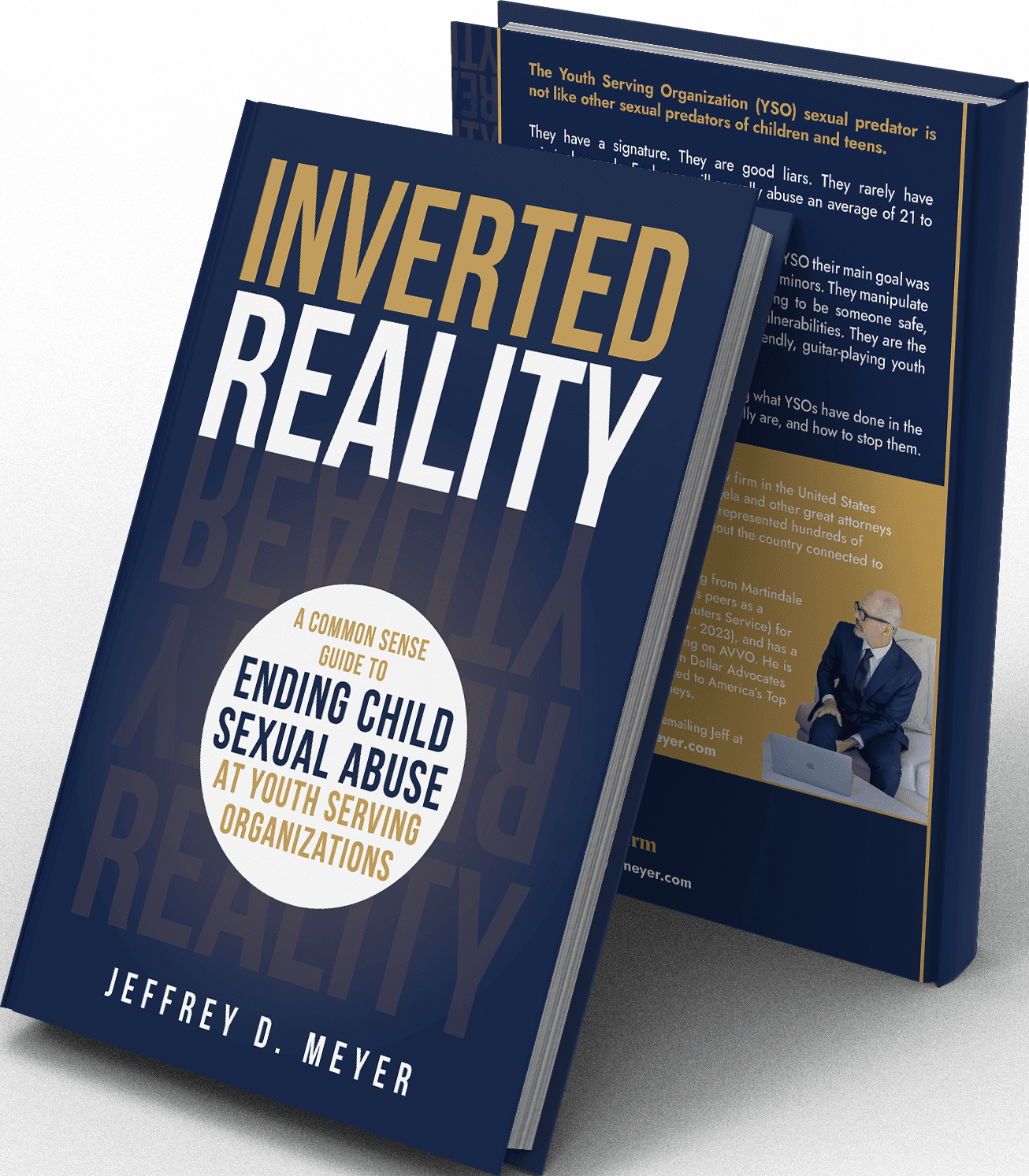
Partner Jeff Meyer Wrote The Book on Ending Child Sex Abuse at Youth Serving Organizations

Inverted

Reality

By Jeffrey D. Meyer

A Revolutionary Guide To Protecting Children And Teens From Sexual Abuse At Schools, Religious Organizations, Camps, Sports Teams And Other Youth Serving Organizations. Written by one of our law partners.


#1

Amazon New Release in Personal Injury Law

#1

Amazon New Release inTeen and Young AdultNonfiction on Sexual Abuse

#1

Best Seller in Teen and Young Adult Nonfiction on Sexual Abuse

You deserve a safe path that honors your dignity

and what you’ve lived through.

* Your initial consultation is free and confidential.

All product names, logos, brands and likenesses are the property of their respective owners and may not be owned or affiliated with Lanier Meyer McBride Blair LLP. This website is a Legal Advertisement sponsored by members of Lanier Meyer McBride Blair LLP. Lanier Meyer McBride Blair LLP is responsible for this advertisement and Lanier Meyer McBride Blair LLP offices at 6363 Woodway Drive, Suite 1025, Houston, Texas 77057. Attorney Mark Lanier is licensed in Texas and New York, Attorney Jeff Meyer is licensed in Arizona, Attorney Skip McBride is licensed in Texas and Arkansas, and Attorney Avram Blair is licensed in Texas, Arizona, Pennsylvania and New York. Lanier Meyer McBride Blair LLP’s clients reside in most or all of the states throughout the country and Lanier Meyer McBride Blair LLP has local counsel relationships in other states where such legal representation is required or appropriate. Information provided on this site is for general information only and does not create an attorney-client relationship and should not be taken as legal advice specific to any particular circumstances. The attorney responsible for the content of this website is Avram J. Blair. By using this site, you agree to the Terms of Use and Privacy Policy.

Copyright © 2025 Lanier Meyer McBride Blair LLP.

All Rights Reserved.

All product names, logos, brands and likenesses are the property of their respective owners and may not be owned or affiliated with Lanier Meyer McBride Blair LLP. This website is a Legal Advertisement sponsored by members of Lanier Meyer McBride Blair LLP. Lanier Meyer McBride Blair LLP is responsible for this advertisement and Lanier Meyer McBride Blair LLP offices at 6363 Woodway Drive, Suite 1025, Houston, Texas 77057. Attorney Mark Lanier is licensed in Texas and New York, Attorney Jeff Meyer is licensed in Arizona, Attorney Skip McBride is licensed in Texas and Arkansas, and Attorney Avram Blair is licensed in Texas, Arizona, Pennsylvania and New York. Lanier Meyer McBride Blair LLP’s clients reside in most or all of the states throughout the country and Lanier Meyer McBride Blair LLP has local counsel relationships in other states where such legal representation is required or appropriate. Information provided on this site is for general information only and does not create an attorney-client relationship and should not be taken as legal advice specific to any particular circumstances. The attorney responsible for the content of this website is Avram J. Blair. By using this site, you agree to the Terms of Use and Privacy Policy.

Copyright © 2025 Lanier Meyer McBride Blair LLP.

All Rights Reserved.

All product names, logos, brands and likenesses are the property of their respective owners and may not be owned or affiliated with Lanier Meyer McBride Blair LLP. This website is a Legal Advertisement sponsored by members of Lanier Meyer McBride Blair LLP. Lanier Meyer McBride Blair LLP is responsible for this advertisement and Lanier Meyer McBride Blair LLP offices at 6363 Woodway Drive, Suite 1025, Houston, Texas 77057. Attorney Mark Lanier is licensed in Texas and New York, Attorney Jeff Meyer is licensed in Arizona, Attorney Skip McBride is licensed in Texas and Arkansas, and Attorney Avram Blair is licensed in Texas, Arizona, Pennsylvania and New York. Lanier Meyer McBride Blair LLP’s clients reside in most or all of the states throughout the country and Lanier Meyer McBride Blair LLP has local counsel relationships in other states where such legal representation is required or appropriate. Information provided on this site is for general information only and does not create an attorney-client relationship and should not be taken as legal advice specific to any particular circumstances. The attorney responsible for the content of this website is Avram J. Blair. By using this site, you agree to the Terms of Use and Privacy Policy.

Copyright © 2025 Lanier Meyer McBride Blair LLP.

All Rights Reserved.

All product names, logos, brands and likenesses are the property of their respective owners and may not be owned or affiliated with Lanier Meyer McBride Blair LLP. This website is a Legal Advertisement sponsored by members of Lanier Meyer McBride Blair LLP. Lanier Meyer McBride Blair LLP is responsible for this advertisement and Lanier Meyer McBride Blair LLP offices at 6363 Woodway Drive, Suite 1025, Houston, Texas 77057. Attorney Mark Lanier is licensed in Texas and New York, Attorney Jeff Meyer is licensed in Arizona, Attorney Skip McBride is licensed in Texas and Arkansas, and Attorney Avram Blair is licensed in Texas, Arizona, Pennsylvania and New York. Lanier Meyer McBride Blair LLP’s clients reside in most or all of the states throughout the country and Lanier Meyer McBride Blair LLP has local counsel relationships in other states where such legal representation is required or appropriate. Information provided on this site is for general information only and does not create an attorney-client relationship and should not be taken as legal advice specific to any particular circumstances. The attorney responsible for the content of this website is Avram J. Blair. By using this site, you agree to the Terms of Use and Privacy Policy.

Copyright © 2025 Lanier Meyer McBride Blair LLP.

All Rights Reserved.