College and Campus
At Lanier Meyer McBride Blair LLP, we understand the devastating impact of sexual abuse in college and campus settings. As dedicated advocates for survivors, we're committed to fighting for justice, holding perpetrators and negligent institutions accountable, and ensuring compliance with Title IX and other crucial laws. This guide provides essential information for survivors, families, and advocates ready to take a stand against campus sexual abuse.


Sexual abuse on college campuses can take many forms:
Sexual assault and rape
Dating violence and intimate partner abuse
Stalking and harassment
Non-consensual sharing of intimate images
Quid pro quo sexual harassment (e.g., by professors or staff)
These abuses can occur in dorms, at campus events, in classrooms, or in off-campus settings involving students
1. The Scope of the Problem: Alarming Statistics
Campus sexual abuse is a pervasive and deeply concerning issue:
According to the Rape, Abuse & Incest National Network (RAINN), 13% of all students experience rape or sexual assault through physical force, violence, or incapacitation during their time in college.
Among undergraduate students, 26.4% of females and 6.8% of males experience rape or sexual assault.
LGBTQ+ students face higher rates of sexual violence, with 21% of TGQN (transgender, genderqueer, nonconforming) college students having been sexually assaulted.
Only 20% of female student victims age 18-24 report to law enforcement.
A study by the Association of American Universities found that 11.7% of all students experience rape or sexual assault through physical force, violence, or incapacitation.
2. The Role of Fraternities and Alcohol
Fraternities and alcohol consumption play a significant role in campus sexual assault:
Women in sororities are 74% more likely to experience rape than other college women.
Men who join fraternities are three times more likely to commit rape than other college men.
Approximately 50% of student sexual assaults involve alcohol consumption by the perpetrator, victim, or both.
90% of acquaintance rapes on college campuses involve alcohol.
Fraternity house residents are more likely to perpetrate sexual assault than other college men.
Factors contributing to this increased risk include:
Party culture: Fraternity parties often involve heavy drinking and can create environments where sexual assault is more likely to occur.
Power dynamics: The hierarchical structure of fraternities can foster attitudes of entitlement and dominance.
Peer pressure: Group mentality can lead to the normalization of harmful behaviors.
Lack of supervision: Many fraternity events occur in private houses with limited oversight.
3. The Impact of Alcohol on Consent and Reporting
Alcohol significantly complicates issues of consent and reporting:
Intoxication can impair judgment and the ability to give consent.
Survivors may have unclear memories of the assault, making reporting and prosecution more challenging.
There’s often a misplaced sense of shame or self-blame when alcohol is involved, deterring reporting.
Some survivors fear they won’t be believed or will be blamed for drinking.
4. Understanding Title IX and Your Rights
Title IX of the Education Amendments of 1972 is a federal law that states:
“No person in the United States shall, on the basis of sex, be excluded from participation in, be denied the benefits of, or be subjected to discrimination under any education program or activity receiving Federal financial assistance.”
Under Title IX:
Schools must have clear procedures for handling sexual misconduct complaints
Survivors have the right to report abuse and receive support services
Institutions must take immediate action to ensure a survivor can continue their education free from ongoing harassment or retaliation
Both the accuser and the accused have the right to advisors and appeals processes
5. Other Relevant Laws and Regulations
In addition to Title IX, other important laws include:
The Clery Act: Requires colleges to report campus crime statistics and provide timely warnings of safety threats
The Campus SaVE Act: Expands the scope of the Clery Act to address dating violence and stalking
State-specific laws: Many states have enacted their own campus safety laws
6. The Impact on Survivors
Campus sexual abuse can have profound effects:
Academic difficulties and decreased educational opportunities
Mental health issues, including PTSD, depression, and anxiety
Increased risk of substance abuse
Difficulty with interpersonal relationships
Financial burdens due to medical care, therapy, or changes in educational plans
7. Legal Rights and the Power of Action
As advocates for survivors of campus sexual abuse, we fight to protect your rights:
The right to a safe educational environment
The right to report abuse without fear of retaliation
The right to appropriate accommodations to continue your education
The right to a fair and impartial investigation of your complaint
The right to hold both perpetrators and negligent institutions accountable
We’re committed to navigating the complex landscape of Title IX, criminal law, and civil litigation to pursue justice for our clients.
8. Understanding the Title IX Process
The Title IX process typically involves:
Reporting the incident to the school’s Title IX coordinator
Interim measures to ensure the survivor’s safety and access to education
An investigation conducted by trained personnel
A hearing or decision-making process
The opportunity for both parties to appeal the decision
Our experienced attorneys can guide you through this process and ensure your rights are protected at every stage.
Holding Institutions Accountable
Colleges and universities can be held accountable if they:
Fail to properly investigate reports of sexual abuse
Don’t provide adequate support services to survivors
Allow a hostile environment to persist on campus
Retaliate against individuals who report abuse
Fail to comply with Title IX regulations
2. Overcoming Challenges in Campus Sexual Abuse Cases
Pursuing justice in these cases can present unique challenges:
Navigating both criminal and campus disciplinary processes
Dealing with alcohol-related issues that may complicate consent
Overcoming victim-blaming attitudes
Addressing confidentiality concerns
Challenging institutional cover-ups or negligence
Our firm is experienced in addressing these challenges and building strong cases for our clients.
3. Supporting Survivors
We’re dedicated to connecting survivors with crucial support:
Campus and community-based sexual assault support services
Counseling and mental health resources
Academic accommodations and support
Legal advocacy throughout the Title IX and potential criminal processes
4. The Value of Experienced Legal Counsel
An attorney experienced in campus sexual abuse cases can provide:
In-depth understanding of Title IX and related laws
Strategies for navigating both campus disciplinary processes and potential civil litigation
Advocacy for appropriate interim measures and accommodations
Support in dealing with law enforcement if criminal charges are pursued
Taking a Stand: The Power of Your Action
By taking action against campus sexual abuse, you’re not just seeking personal justice – you’re helping to create safer campuses for all students. Your courage can:
Hold perpetrators and negligent institutions accountable
Force colleges to implement stronger prevention and response measures
Raise awareness about the reality of campus sexual abuse
Empower other survivors to come forward

You Are Not Alone
Even if it happened a long time ago, we can often still find a way to help.
Reach out today for a confidential consultation. No judgment, no pressure,
just understanding and help.
* Your initial consultation is free and confidential.
Latest News & Updates

Media And Awards For Mark Lanier













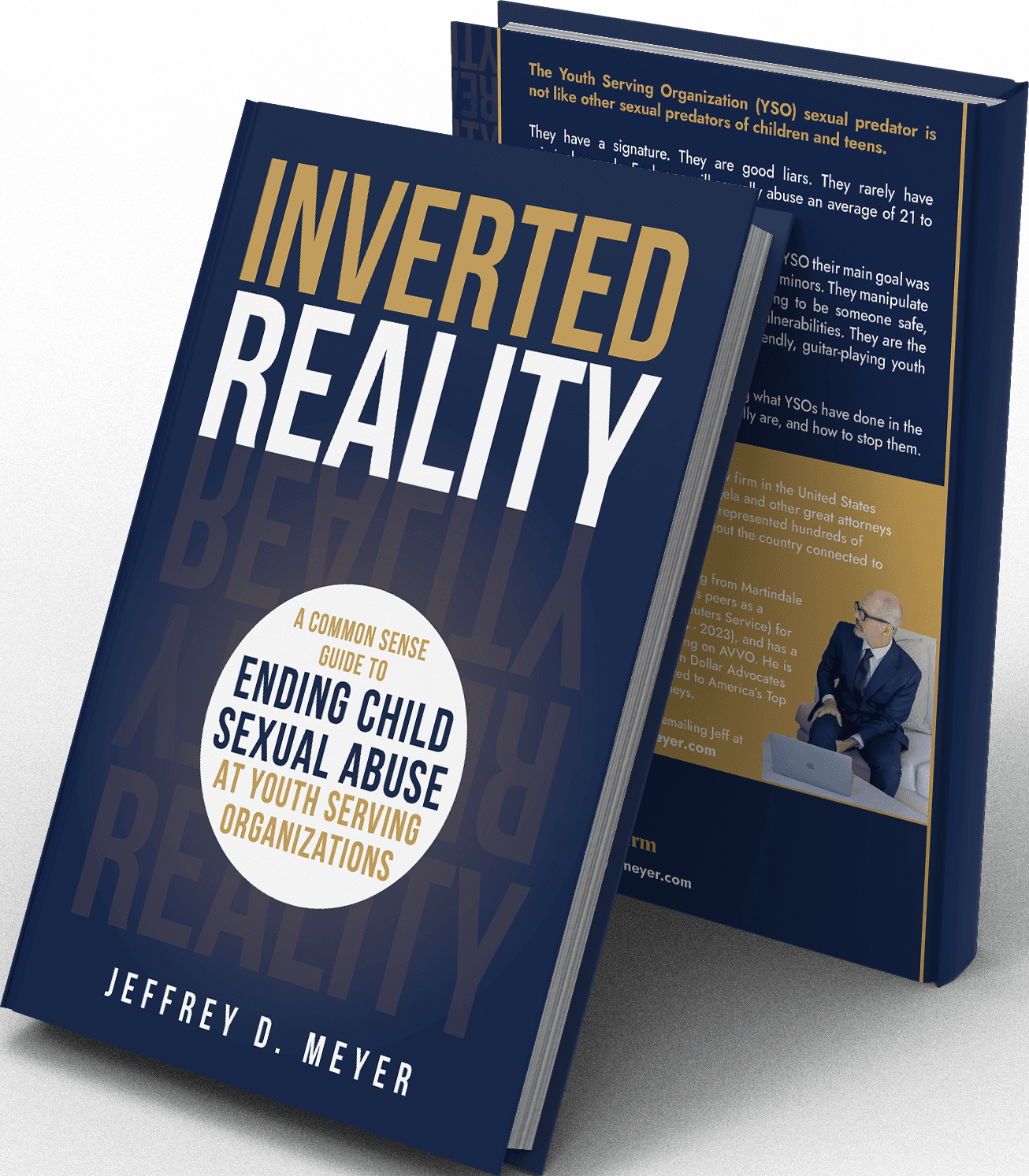
Inverted
Reality
By Jeffrey D. Meyer
A Revolutionary Guide To Protecting Children And Teens From Sexual Abuse At Schools, Religious Organizations, Camps, Sports Teams And Other Youth Serving Organizations. Written by one of our law partners.


You deserve a safe path that honors your dignity
and what you’ve lived through.
* Your initial consultation is free and confidential.